End-to-end fence installation across Geelong and the Bellarine Peninsula — site prep, poured concrete footings, panel or paling install, and full clean-up. Free on-site quotes.
Drysdale Fencing installs new Colorbond and timber fences across Geelong and the Bellarine Peninsula, plus aluminium slat screens and gates. Every job starts with a free on-site quote and a utility check before digging, and every post is set in poured concrete. Most residential installs are finished within days, not weeks. Call 0485 577 980.
Fence installation in Geelong needs poured concrete footings, not dry-mix, because Greater Geelong sits on reactive expansive clay (Class M to H under AS 2870). Every Drysdale Fencing job covers site measure, post-hole digging, wet-poured footings at the right depth, panel or paling install, and full clean-up. A typical residential run takes 1–3 days on site. Free on-site quotes: call 0485 577 980.
Colorbond and timber make up most of what we put in, alongside aluminium slat and gates. Before anyone digs, there's a free on-site quote and a Dial Before You Dig check, and each post goes into a poured concrete footing set to the depth your soil needs.
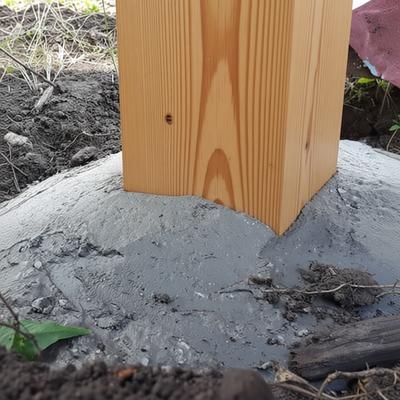
Geelong sits on reactive expansive clay, classified Class M to Class H under AS 2870. That clay swells and shrinks with the seasons and will move a post that isn't set properly. We pour wet concrete around every post rather than using dry-mix, and set the depth to suit — typically 600–750mm for a standard 1.8m fence, deeper on slopes or in higher-reactivity ground.
Same four steps every time, whether it's 15 metres of paling or a 60-metre Colorbond run.
We come out, measure the run, have a look at the ground and the access, put in a Dial Before You Dig check for underground services, and sort out where the boundary sits. Then you get an itemised written quote.
On the day we clear the fence line, mark out the post positions, and get access sorted. If there's an old fence to come out, we pull it out before we start digging and take all the material away.
We machine-auger the holes to the right depth for your soil class, set each post to height, plumb it, then pour wet concrete around it and let it cure. On reactive clay, that's usually 600–750mm deep for a standard 1.8m fence.
We fit the rails between the posts, then hang the Colorbond panels, timber palings, or aluminium slats. Gate hardware and caps go on last. Then we clean up and leave the site tidy.
Much of the residential land across the Bellarine, Leopold, Clifton Springs, and the central Geelong suburbs sits on Quaternary clay, classified Class M (moderately reactive) up to Class H (highly reactive) under AS 2870. Those classes measure how far the ground moves as it wets up and dries out.
A post set too shallow, or in dry-mix, will move as the clay swells in winter and pulls back in summer. Within two or three seasons the post leans, the line goes out of level, gates stop latching, and panels buckle along the run. We attend call-outs for exactly this, regularly.
We set posts in poured concrete at the depth your block's soil calls for:
We never nail rails or plinths in. Every rail and every plinth board is fixed to the posts with large-gauge galvanised (Class 3) bugle batten screws, driven up tight. The only place we use nails is fixing the palings to the rails — everything structural is screwed.
Nails work loose over time. Timber moves with the seasons and the ground shifts on Geelong's reactive clay. A nailed rail slowly pulls away from the post, and before long the run sags and gaps open up. A screwed rail holds tight.
It takes more time per fence to install this way. It's also why our fences stay straight for years rather than starting to lean within a season or two.
Get a Free On-Site Quote
Our written quotes break out every component so you know exactly what you're paying for.
Removal of existing fencing sits as its own line item. We confirm whether you actually need it at the site visit, and it never appears on the bill without you knowing it's there.
Same footings and fixings whichever you choose. The choice comes down to how much privacy you want, the look, and the budget.
BlueScope steel panels, termite-proof and low maintenance. The most popular choice for full privacy boundaries in Geelong.
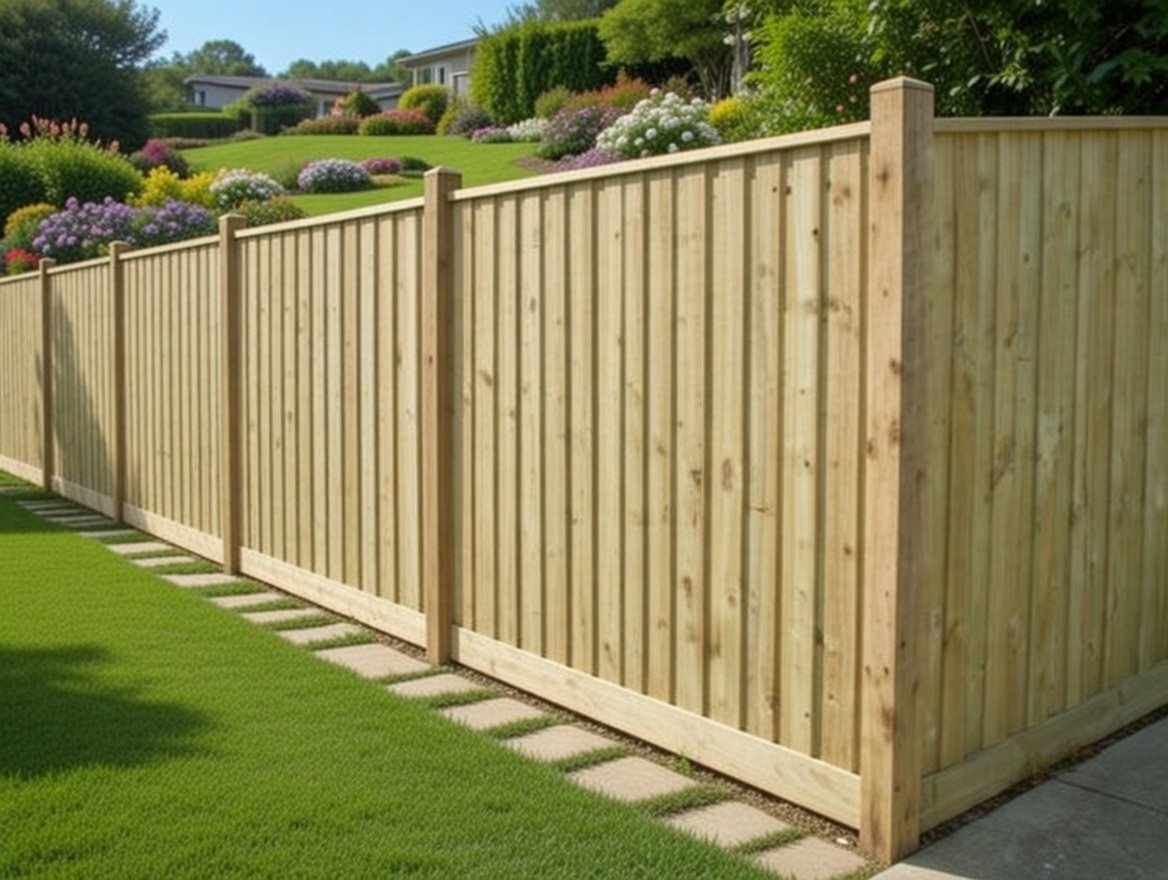
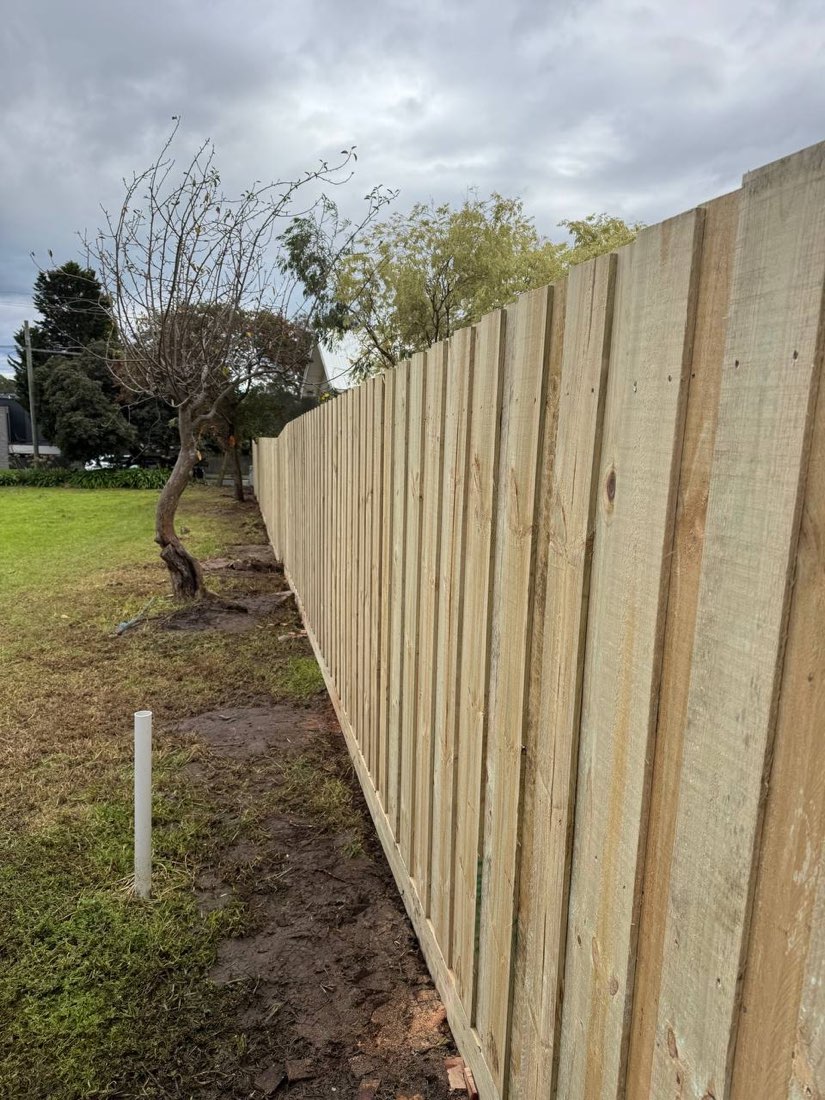
Hardwood posts with pine or hardwood palings. Paling, lapped and capped, picket — classic residential styles, priced per project.
Powder-coated aluminium slats for front boundaries and privacy screens. Fully corrosion-resistant for coastal Bellarine properties.
Manual swing and pedestrian gates in matching materials.
Related guides: read our guide to fencing for new builds on the Bellarine Peninsula, or our tips on how to choose a fence builder in Geelong.